Thyroid Surgery
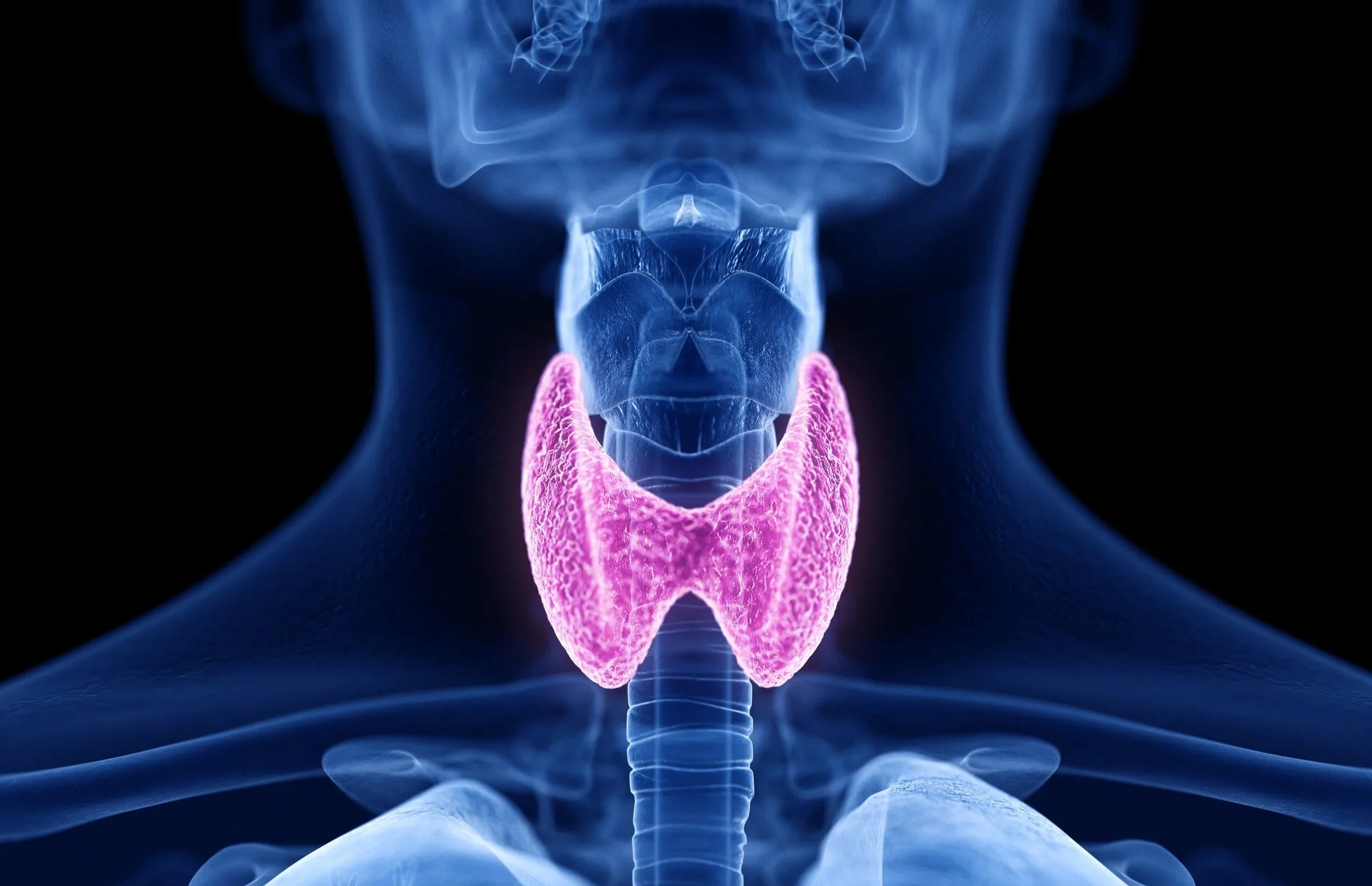
What is the thyroid gland?
The thyroid gland is a butterfly-shaped endocrine gland that is normally located in the lower front of the neck. The thyroid’s job is to make thyroid hormones, which are secreted into the blood and then carried to every tissue in the body. Thyroid hormone helps the body use energy, stay warm and keep the brain, heart, muscles, and other organs working as they should.
What are the types of thyroid cancer?
Papillary thyroid cancer. Papillary thyroid cancer is the most common type, making up about 70% to 80% of all thyroid cancers. Papillary thyroid cancer can occur at any age. It tends to grow slowly and often spreads to lymph nodes in the neck. However, unlike many other cancers, papillary cancer has a generally excellent outlook, even if there is spread to the lymph nodes. Papillary and follicular thyroid cancers are also referred to as “differentiated” thyroid cancers.
Follicular thyroid cancer. Follicular thyroid cancer makes up about 10% to 15% of all thyroid cancers in the United States. Follicular cancer can spread to lymph nodes in the neck, but this is much less common than with papillary cancer. Follicular cancer is also more likely than papillary cancer to spread to distant organs, particularly the lungs and bones.
Medullary thyroid cancer. Medullary thyroid cancer (MTC), accounts for approximately 2% of all thyroid cancers. Approximately 25% of all MTC runs in families and is associated with other endocrine tumors. In family members of an affected person, a test for a genetic mutation in the RET proto-oncogene can lead to an early diagnosis of medullary thyroid cancer and, as a result, to curative surgery.
Anaplastic thyroid cancer. Anaplastic thyroid cancer is the most advanced and aggressive thyroid cancer and the least likely to respond to treatment. Anaplastic thyroid cancer is very rare and is found in less than 2% of patients with thyroid cancer.
What causes thyroid cancer?
Thyroid cancer is more common in people who have a history of exposure to high doses of radiation, have a family history of thyroid cancer, and are older than 40 years of age. However, for most patients, we do not know the specific reason or reasons why thyroid cancer develops.
High dose radiation exposure, especially during childhood, increases the risk of developing thyroid cancer. Prior to the 1960s, X-ray treatments were often used for conditions such as acne, inflamed tonsils and adenoids, enlarged lymph nodes, or to treat enlargement of a gland in the chest called the thymus. All these treatments were later found to be associated with an increased risk of developing thyroid cancer later in life. Routine X-ray exposure such as dental X-rays, chest X-rays and mammograms have not been shown to cause thyroid cancer.
How is thyroid cancer diagnosed?
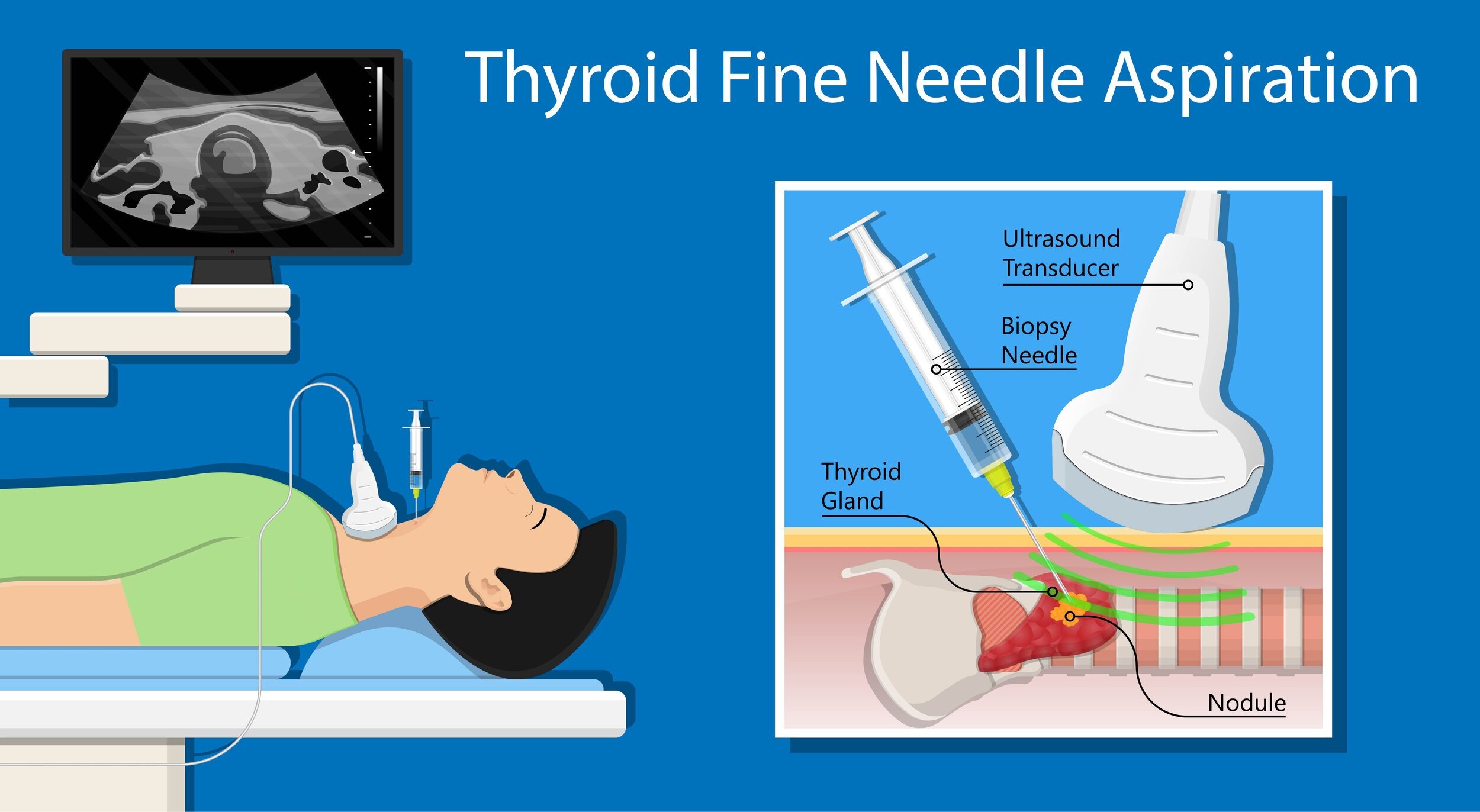
Patients that present with a lump on their thyroid gland will need to have an ultrasound to evaluate the nodule and determine if a fine needle aspiration biopsy (FNA) is necessary (see Thyroid nodule brochure). Although thyroid nodules are very common, less than 1 in 10 will be a thyroid cancer. The results of the FNA will determine whether the nodule is suspicious for cancer and will help determine if thyroid surgery is needed.
How is thyroid cancer treated?
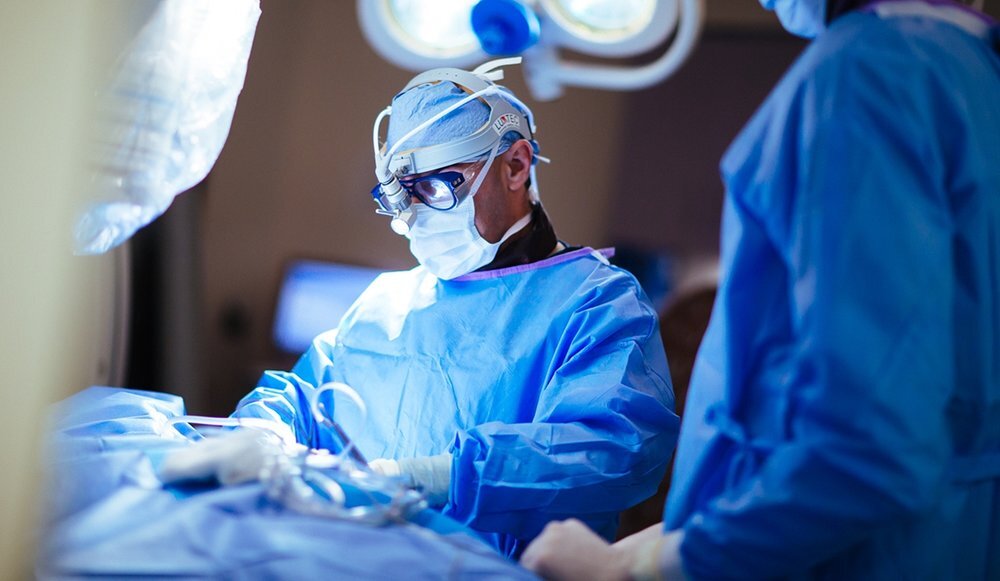
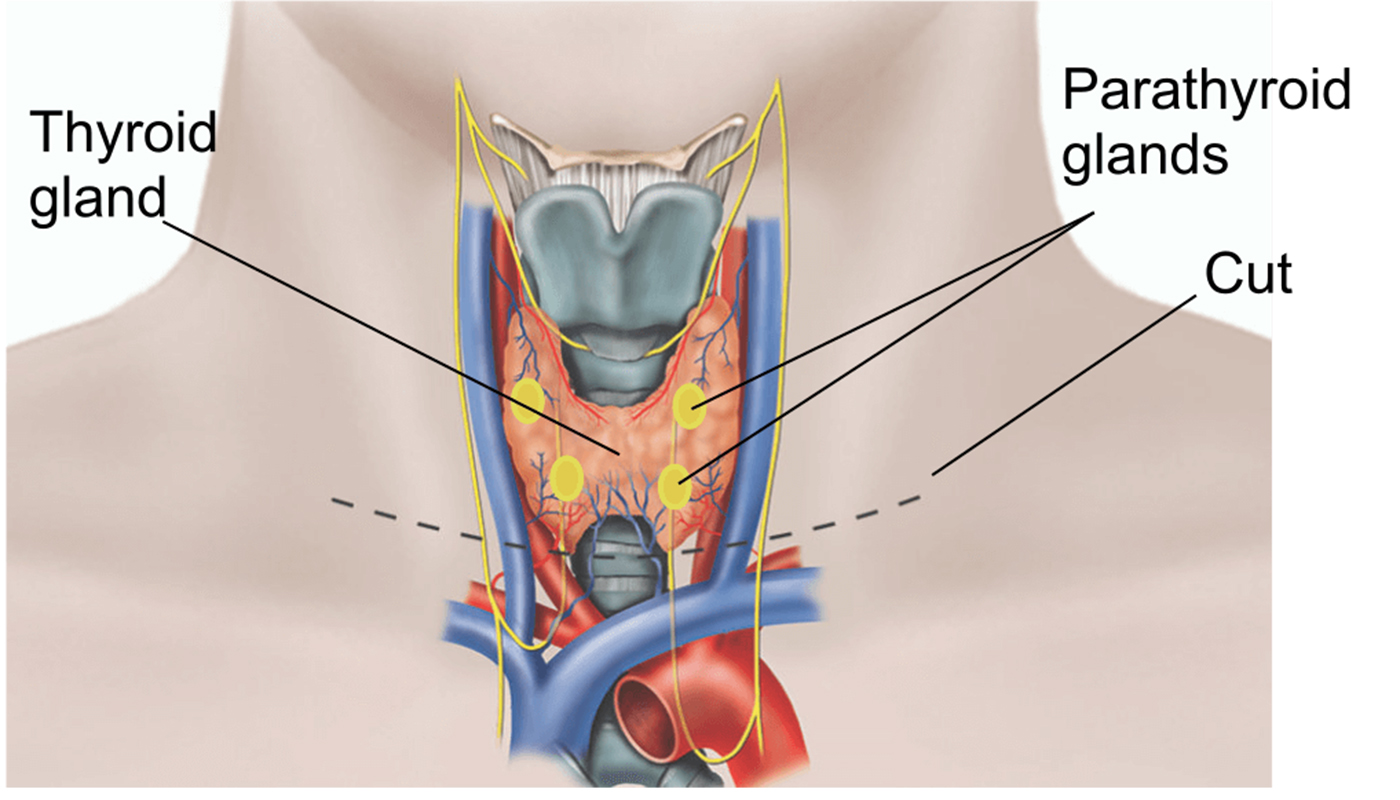
Surgery. The primary therapy for all types of thyroid cancer is surgery (see Thyroid surgery brochure). Thyroid surgery is performed through a low neck incision hidden in the natural skin creases. The extent of surgery for differentiated thyroid cancers (removing only the lobe involved with the cancer- called a lobectomy or the entire thyroid – called a total thyroidectomy) will depend on the size of the tumor and on whether or not the tumor is confined to the thyroid. Sometimes findings either before surgery or at the time of surgery – such as spread of the tumor into surrounding areas or the presence of obviously involved lymph nodes – will indicate that a total thyroidectomy is a better option.
Potential reasons to consider removing the entire thyroid gland (total thyroidectomy):
The thyroid cancer is:
A large papillary thyroid cancer (more than 4 centimeters or 1.75 inches in greatest dimension)
A follicular thyroid cancer with or without distant spread
A hurthle cell cancer (carcinoma)
A medullary thyroid cancer (carcinoma)
A patient who is direct relative of a medullary thyroid cancer patient and has tested positive for a genetic mutation of the ret gene predisposing them to develop a hereditary medullar thyroid cancer (carcinoma)
The thyroid cancer appears to have extended outside of the surface of the thyroid gland (called its capsule or soft tissue extension)
The thyroid cancer has spread to the lymph nodes underneath the thyroid gland (called central compartment lymph nodes
The thyroid cancer has spread to lymph nodes along the side of the neck (called lateral neck lymph nodes)
The papillary, follicular or hurthle cell thyroid cancer has spread to distant sites outside of the neck (most commonly the lungs, bones, or liver)
The papillary thyroid cancer patient with a small thyroid cancer, does not accept the potential of another surgery to remove the remainder of the thyroid gland if a new thyroid cancer should develop within the remaining thyroid tissue.
The thyroid cancer developed in a radiation exposed thyroid gland
Some patients will have thyroid cancer present in the lymph nodes of the neck (lymph node metastases). These lymph nodes can be removed at the time of the initial thyroid surgery or sometimes, as a later procedure if lymph node metastases become evident later on. For very small cancers (<1 cm) that are confined to the thyroid, involving only one lobe and without evidence of lymph node involvement a simple lobectomy (removal of only the involved lobe) is considered sufficient. Recent studies even suggest that small tumors – called micro papillary thyroid cancers – may be observed without surgery depending on their location in the thyroid. After surgery, most patients need to be on thyroid hormone for the rest of their life (see Thyroid hormone treatment brochure below). Often, thyroid cancer is cured by surgery alone, especially if the cancer is small. If the cancer is larger, if it has spread to lymph nodes or if your doctor feels that you are at high risk for recurrent cancer, radioactive iodine may be used after the thyroid gland is removed.
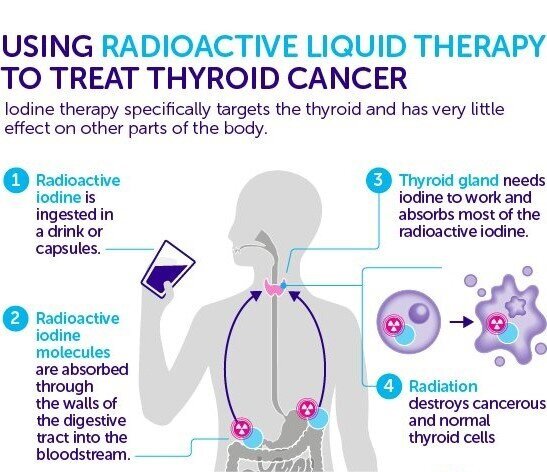
Radioactive iodine therapy. (Also referred to as I-131 therapy). Thyroid cells and most differentiated thyroid cancers absorb and concentrate iodine. The purpose of radioactive iodine is to kill any thyroid tissue and most importantly to kill any thyroid cancer cells that may still be in your neck. Radioactive iodine is typically used for thyroid cancer that has grown outside of the thyroid gland, for example into the muscle on top of the thyroid gland. Radioactive iodine is also indicated when the thyroid cancer has spread to lymph nodes or to distant sites in the body. That is why radioactive iodine can be used to eliminate all remaining normal thyroid tissue and potentially destroy residual cancerous thyroid tissue after thyroidectomy (see Radioactive iodine brochure below). When you take a radioactive iodine pill, the radioactive iodine can go directly to thyroid tissue and thyroid cancer cells. This produces high concentrations of radioactive iodine in thyroid tissues, eventually causing the cells to die. Since most other tissues in the body do not efficiently absorb or concentrate iodine, radioactive iodine used during the ablation procedure usually has little or no effect on tissues outside of the thyroid. However, in some patients who receive larger doses of radioactive iodine for treatment of thyroid cancer metastases, radioactive iodine can affect the glands that produce saliva and result in dry mouth complications. Radioactive iodine will not make you sick, and will not make your hair fall out.
If Doctor Reising recommends radioactive iodine therapy, your TSH will need to be elevated prior to the treatment. This can be done in one of two ways.
The first is by stopping thyroid hormone pills (levothyroxine) for 3-6 weeks. This causes high levels of TSH to be produced by your body naturally. This results in hypothyroidism, which may involve symptoms such as fatigue, cold intolerance and others, that can be significant. To minimize the symptoms of hypothyroidism your doctor may prescribe T3 (Cytomel®, liothyronine) which is a short acting form of thyroid hormone that is usually taken after the levothyroxine is stopped until the final 2 weeks before the radioactive iodine treatment.
Alternatively, TSH can be increased sufficiently without stopping thyroid hormone medication by injecting TSH into your body. Recombinant human TSH (rhTSH, Thyrogen®) can be given as two injections in the days prior to radioactive iodine treatment. The benefit of this approach is that you can stay on thyroid hormone and avoid possible symptoms related to hypothyroidism however it is very expensive and many insurance companies will not pay for it as part of the health plan.
Regardless of whether you go hypothyroid (stop thyroid hormone) or use recombinant TSH therapy, you may also be asked to go on a low iodine diet for 1 to 2 weeks prior to treatment (see Low-iodine diet brochure below), which will result in improved absorption of radioactive iodine, maximizing the treatment effect.
What is the treatment of advanced thyroid cancer?
Thyroid cancer that spreads (metastasizes) outside the neck area is rare, but can be a serious problem. Surgery and radioactive iodine remain the best way to treat such cancers as long as these treatments continue to work. However, for more advanced cancers, or when radioactive iodine therapy is no longer effective, other forms of treatment are needed. External beam radiation directs precisely focused X-rays to areas that need to be treated—often tumor that has recurred locally or spread to bones or other organs. This can kill or slow the growth of those tumors. Cancer that has spread more widely requires additional treatment.
New chemotherapy agents that have shown promise treating other advanced cancers are becoming more widely available for treatment of thyroid cancer. These drugs rarely cure advanced cancers that have spread widely throughout the body but they can slow down or partially reverse the growth of the cancer. These treatments are usually given by an oncologist (cancer specialist).
What is the follow up for patients with thyroid cancer?
Periodic follow-up examinations are essential for all patients with thyroid cancer because the thyroid cancer can return—sometimes several years after successful initial treatment. These follow-up visits include a careful history and physical examination, with particular attention to the neck area. Neck ultrasound is an important tool to view the neck and look for nodules, lumps or cancerous lymph nodes that might indicate the cancer has returned. Blood tests are also important for thyroid cancer patients. Most patients who have had a thyroidectomy for cancer require thyroid hormone replacement with levothyroxine once the thyroid is removed (see Thyroid hormone treatment below). The dose of levothyroxine prescribed by your doctor will in part be determined by the initial extent of your thyroid cancer. More advanced cancers usually require higher doses of levothyroxine to suppress TSH (lower the TSH below the low end of the normal range). In cases of minimal or very low risk cancers, it’s typically safe to keep TSH in the normal range. The TSH level is a good indicator of whether the levothyroxine dose is correctly adjusted and should be followed periodically by your doctor.
Another important blood test is measurement of thyroglobulin (Tg). Thyroglobulin is a protein produced by normal thyroid tissue and thyroid cancer cells, and is usually checked at least once a year. Following thyroidectomy and radioactive iodine ablation, thyroglobulin levels usually become very low or undetectable when all tumor cells are gone. Therefore, a rising thyroglobulin level should raise concern for possible cancer recurrence. Some patients will have thyroglobulin antibodies (TgAb) which can make it difficult to rely on the Tg result, as this may be inaccurate.
In addition to routine blood tests, your doctor may want to repeat a whole-body iodine scan to determine if any thyroid cells remain. Increasingly, these scans are only done for high risk patients and have been largely replaced by routine neck ultrasound and thyroglobulin measurements that are more accurate to detect cancer recurrence, especially when done together.
What is the prognosis of thyroid cancer?
Overall, the prognosis of differentiated thyroid cancer is excellent, especially for patients younger than 45 years of age and those with small cancers. Patients with papillary thyroid cancer who have a primary tumor that is limited to the thyroid gland have an excellent outlook. Ten year survival for such patients is 100% and death from thyroid cancer anytime thereafter is extremely rare. For patients older than 45 years of age, or those with larger or more aggressive tumors, the prognosis remains very good, but the risk of cancer recurrence is higher. The prognosis may not be quite as good in patients whose cancer is more advanced and cannot be completely removed with surgery or destroyed with radioactive iodine treatment. Nonetheless, these patients often are able to live a long time and feel well, despite the fact that they continue to live with cancer. It is important to talk to your doctor about your individual profile of cancer and expected prognosis. It will be necessary to have lifelong monitoring, even after successful treatment.