Parathyroid Surgery
Where are Parathyroid Glands located?
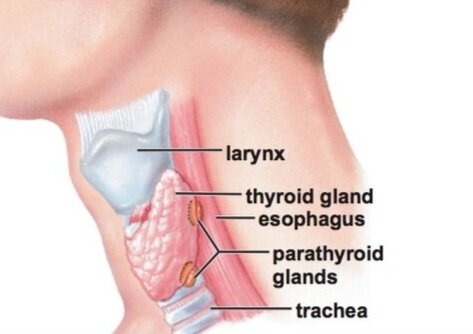
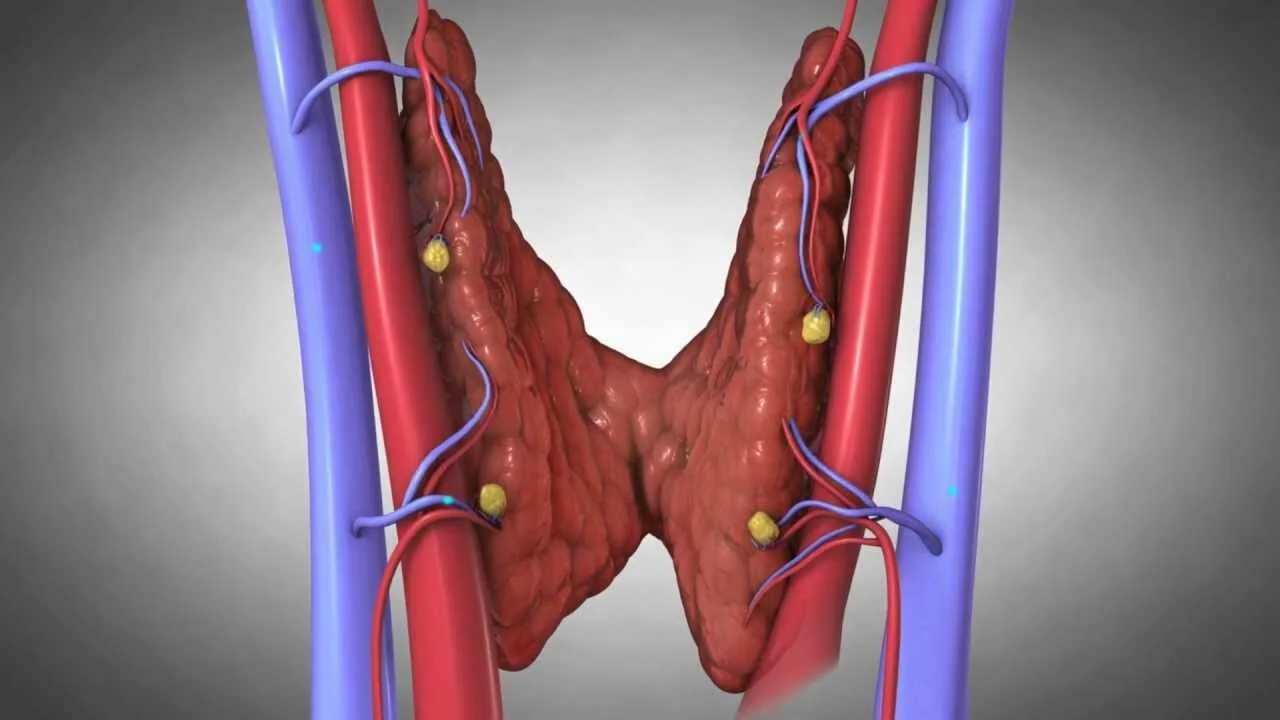
The four parathyroid glands are located behind the thyroid and are shown in this picture as the mustard yellow glands behind the pink thyroid gland. They are normally the size of a grain of rice. Occasionally they can be as large as a pea and still be normal. The carotid arteries are shown on both sides of the thyroid running from the heart up to the brain. Although the thyroid gland and the parathyroid glands are neighbors and are both part of the endocrine system, they are otherwise unrelated. They do not have the same function, just similar and confusing names!
What do the parathyroid glands do?
Parathyroid glands continuously monitor, regulate and control the calcium levels in our blood, our bones, and throughout our body by producing a hormone called Parathyroid Hormone (PTH). The parathyroid glands regulate the calcium level in our bodies within a very narrow range so that the nervous and muscular systems can function properly. They measure the amount of calcium in the blood every minute of every day, and if the calcium levels go down a little bit, the parathyroid glands recognize it and make more parathyroid hormone (PTH) which goes to the bones and takes some calcium out (makes a withdrawal from the calcium vault) and puts it into the blood. When the calcium in the blood is high enough, then the parathyroids shut down and stop making PTH.
Over-activity of one or more of the parathyroids which make too much parathyroid hormone causing a potentially serious calcium imbalance (too high calcium in the blood). This is called hyperparathyroidism. (See below)
What is the role of calcium in our body?
Calcium is an essential mineral to life and bodily function. Our bodies use calcium for three main purposes:
Calcium provides the electrical energy for our nervous system. The most important thing that calcium does in the human body is provide the means for electrical impulses to travel along nerves. Calcium is what the nervous system of our body uses to conduct electricity. This is why the most common symptoms of parathyroid disease and high calcium levels are related to the nervous system (depression, weakness, tiredness, etc).
Calcium provides the electrical energy for our muscular system. Just like the nerves in our bodies, our muscles use changes in calcium levels inside the cells to provide the energy to contract. When the calcium levels are not correct, people can feel weak and have muscle cramps.
Calcium provides strength to our skeletal system. Everyone knows that calcium is used to make our bones strong, but this is really only half the story. The bones themselves serve as the storage system that we use to make sure we will always have a good supply of calcium. Just like a bank vault where we constantly make deposits and withdrawals, we are constantly putting calcium into our bones, and constantly taking calcium out of our bones with the sole purpose of keeping our calcium levels in the blood at the correct level. Remember, the most important role of calcium is to provide for the proper functioning of our nervous system, not to provide strength to our bones, that is secondary.
Thus, calcium is the most closely regulated element in our bodies. When our calcium levels get elevated (almost always due to an overactive parathyroid gland), it can cause changes in our personality and many other nervous-system symptoms (depression, etc). So, parathyroid disease is not just about osteoporosis and kidney stones, it is primarily about us feeling "normal" and enjoying life.
What is Hyperparathyroidism?
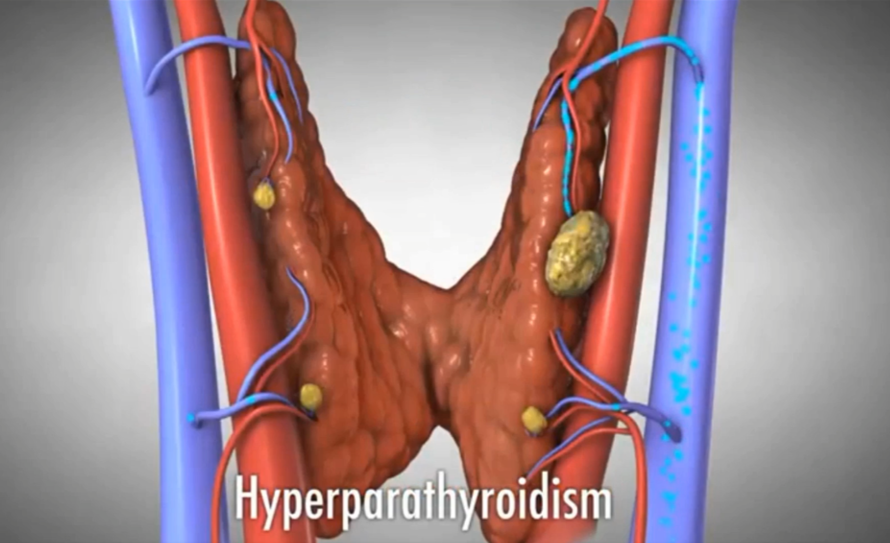
Hyperparathyroidism occurs when one (or more) of the four parathyroid glands grows into a tumor and behaves inappropriately by constantly making excess parathyroid hormone (PTH) leading to elevated blood calcium levels and depletion of bone calcium. If you have parathyroid disease, you very likely have 3 normal parathyroid glands the size of a grain of rice and one parathyroid tumor that is as big as an olive, grape, or even a walnut (like in the image above). Hyperparathyroidism is a benign disease with a malignant potential. Untreated it is believed to carry a near two-fold increase in cancers of the breast, colon and prostate. It is know to increase the risk of cardiac disease, hypertension and stroke by nearly double, ultimately leading to a several year decrease in life expectancy. Nearly all patients with primary hyperparathyroidism will develop osteoporosis if untreated an nearly thirty percent will develop kidney stones. Aside from the damage to many organ systems, these small tumors frequently cause chronic fatigue, memory loss, a many other nonspecific symptoms that significantly decrease quality of life. If you have hyperparathyroidism you will need an operation to remove the parathyroid gland which has become a tumor. Hyperparathyroidism is easily cured with precise surgery done by an experienced surgeon like Dr. Reising and has a tremendous impact on a patient's health and their quality of life.
Click on the image above or the button below to watch a video on hyperparathyroidism and how Dr. Reising can cure your disease with a minimally invasive parathyroidectomy procedure.
What are the symptoms of hyperparathyroidism?
Chronic fatigue / feeling tired all the time (#1 symptom)
General feeling of "illness" and "feeling bad" that can be hard to describe
Lack of interest in activities that you previously enjoyed, decrease in sex drive
Difficulty concentrating or focusing
Memory loss / feeling like you might be developing dementia
Insomnia / difficulty sleeping through the night
Depression or anxiety
Needing naps during the day
Irritability / crankiness
Frequent headaches
Osteoporosis and Osteopenia
Bone pain, particularly in the hands, feet, arms, and legs, but can be anywhere
Gastric acid reflux / heartburn / GERD
Thinning hair (predominately in middle aged females on the front part of the scalp)
Kidney stones
Chronic kidney disease / kidney failure
High Blood Pressure / Hypertension / Erratic blood pressure
Heart palpitations
Atrial fibrillation / cardiac arrhythmias
High liver function tests
Most people with hyperparathyroidism will have 5 - 6 of these symptoms or signs. A few people will say they don't have any... but after an operation they will often say recognize how much better they feel. In general, the longer you have hyperparathyroidism, the more symptoms you will develop.

The Facts about Hyperparathyroidism
There are no drugs that will make parathyroid disease better. None.
Nearly all parathyroid patients have symptoms; 95% know it--and feel bad. Most of the rest just don't know it until the disease is fixed.
Symptoms of parathyroid disease do NOT correlate with the level of calcium in the blood. Many patients with only slightly elevated calcium and parathyroid hormone will have BAD symptoms and develop lots of secondary health issues.
All patients with parathyroid disease have calcium levels and PTH levels that go up and down. Fluctuating levels of calcium are typical of parathyroid disease.
How high the calcium has become has nothing to do with the severity of hyperparathyroidism. It is the duration (in years) that the calcium is high that causes problems.
Taking Fosamax, Actonel, Boniva, or Reclast (etc) will NOT help bones that are being attacked by a bad parathyroid. These osteoporosis drugs have no place in the treatment of parathyroid disease.
Parathyroid disease is a lethal disease. But just like high cholesterol and high blood pressure, it takes 25 years before it starts killing.
There is only one treatment for parathyroid disease (hyperparathyroidism): Surgery to remove the parathyroid tumor (or tumors)
If your surgeon does not check all four glands, you have a 20% chance of not being completely cured and will need a second operation sometime in the future.
The success rate and complication rate for parathyroid surgery is VERY dependent upon the surgeon's experience.